

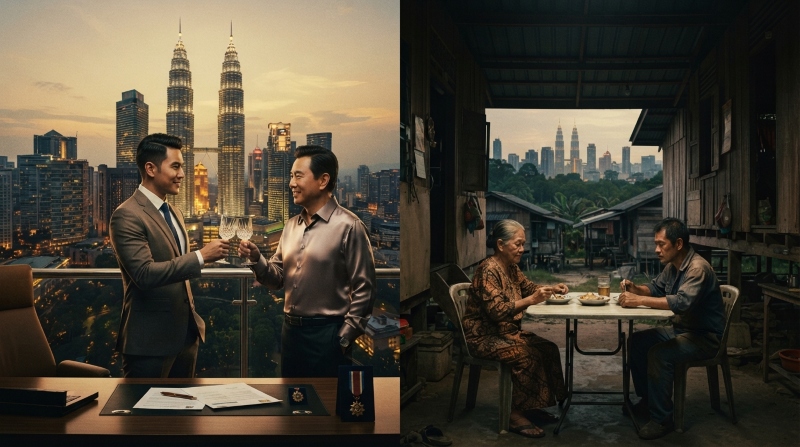
The combined wealth of the world’s 12 richest people is greater than that held by the poorest half of humanity, according to Oxfam.
But beyond the staggering numbers, what does this concentration of wealth mean for the way our societies function?
From unequal access to housing and public services to the growing influence of wealthy individuals and companies over markets and democratic institutions, wealth inequality has consequences that extend far beyond the gap between rich and poor.
So when does inequality become a problem, and what can governments do to address it? BFM talks to Khazanah Research Institute researcher Mikhail Rosli.
Their conversation discussed several key questions.
When does wealth inequality become a problem for society?
- Sign up for Aliran's free daily email updates or weekly newsletters or both
- Make a one-off donation to Persatuan Aliran Kesedaran Negara (ALIRAN), Maybank a/c 507246118995 or CIMB a/c 8004240948
- Make a regular pledge or periodic auto-donation to Aliran
- Become an Aliran member
How does the concentration of wealth shape people’s access to housing, education and other public goods? And at what point do people begin to live in such different material conditions that it undermines social cohesion?
How does concentrated wealth translate into political and economic power?
Beyond the ability to accumulate more assets, how can extreme wealth distort markets, influence political institutions and give companies leverage over governments? What does this mean for countries in the Global South that remain dependent on powerful foreign companies?
Do billionaires really owe their wealth to talent and hard work?
How much of extreme wealth comes from innovation and entrepreneurship, and how much comes from inheritance, monopoly, cronyism and the financialisation of the economy? Are markets actually rewarding merit, or simply allocating wealth according to ownership and scarcity?
What would a fairer economic system look like?
Should governments tax extreme wealth and capital gains more effectively, strengthen workers’ bargaining power, and expand access to public goods? And how do we build a society held together by reciprocity and social justice rather than the ability to pay?
Presenters: Dashran Yohan and Sharaad Kuttan
Producer: Dashran Yohan for BFM
The views expressed in Aliran's media statements and the NGO statements we have endorsed reflect Aliran's official stand. Views and opinions expressed in other pieces published here do not necessarily reflect Aliran's official position.
- Tegakkan maruah serta kualiti kehidupan rakyat
- Galakkan pembangunan saksama, lestari serta tangani krisis alam sekitar
- Raikan kerencaman dan keterangkuman
- Selamatkan demokrasi dan angkatkan keluhuran undang-undang
- Lawan rasuah dan kronisme
