


Joseph Masilamany
The row over Dara, Amoi and Kelat is no longer just about three elephants. It is about transparency, accountability and whether Malaysia has lived up to its duty of care.
Conservation experts and animal welfare advocates have raised concerns about the three elephants housed at Osaka’s Tennoji Zoo. Their concerns have reignited a debate many thought was settled.
The three elephants arrived at Tennoji Zoo in March under a 25-year cooperation and breeding deal. At the time, officials presented the transfer as a legitimate arrangement between two zoos.
Today, a growing number of welfare advocates, conservationists and even public officials are asking whether the animals are getting the care and environmental enrichment they deserve.
At the heart of the controversy is an independent report by Dr William Keith Lindsay. A respected elephant conservation specialist, he has spent nearly five decades studying elephant behaviour. His findings are hard to dismiss as merely the emotional reaction of activists.
The report says the elephants are showing signs of physical and psychological stress. This includes stereotypic behaviour – repetitive actions widely seen as signs of distress in captive animals.
- Sign up for Aliran's free daily email updates or weekly newsletters or both
- Make a one-off donation to Persatuan Aliran Kesedaran Negara (ALIRAN), Maybank a/c 507246118995 or CIMB a/c 8004240948
- Make a regular pledge or periodic auto-donation to Aliran
- Become an Aliran member
Even more troubling are concerns about the size of the enclosure housing the elephants. Lindsay reportedly found that it measures around 1,612 square metres.
Animal welfare advocates point out that this falls dramatically short of standards adopted elsewhere, including Britain’s updated statutory minimum of 20,000 square meters to house an elephant herd.
If these assessments are accurate, Malaysia cannot simply shrug and say the elephants are no longer our problem.
Heritage beyond borders
Malaysia often speaks proudly of its biodiversity. We celebrate our rainforests, our wildlife and our role as custodians of some of the world’s most remarkable species.
But that role cannot be selective. It cannot end the moment an animal leaves our borders. Dara, Amoi and Kelat may now live in Japan, but they remain part of Malaysia’s conservation story. Their welfare reflects on the authorities who approved their transfer.
That is why calls for more transparency deserve serious attention.
Animal welfare groups have questioned the arrangements behind the transfer, including the CITES (Convention on International Trade in Endangered Species) certification process. They ask how officials judged it to be in the elephants’ best interests.
Zoo officials insist no payment changed hands and that proper approvals were obtained. Both sides deserve to be heard.
These questions are not attacks on government agencies or on diplomatic ties. They are fair questions in a democratic society.
Transparency protects everyone involved. If the right procedures were followed and welfare was properly assessed, the facts should be made public.
The irony we cannot ignore
There is another uncomfortable truth at the heart of this controversy.
For years, Malaysia has struggled to protect its wild elephants. Expanding plantations, new infrastructure and shrinking forest corridors have pushed elephants into conflict with people. Herds are displaced and habitats broken up. Animals are forced into dangerous encounters with communities.
Conservationists have long warned that Malaysia’s elephants need space to live as elephants. They need room to roam, to maintain family bonds and to follow ancient migration routes.
We acknowledge the importance of space and natural behaviour for wild elephants. Yet we now find ourselves defending the transfer of three elephants into an enclosure that critics say is far too small.
If the reports about conditions at Tennoji Zoo are accurate, the contradiction is glaring. We cannot demand room for elephants in the wild while excusing cramped conditions in captivity.
A test of trust
This is no longer just an animal welfare dispute but a test of institutional credibility.
Public trust depends on officials being willing to explain decisions about endangered wildlife. This matters especially when those decisions generate widespread concern. Silence or vague reassurance will only deepen suspicion.
Natural Resources and Environmental Sustainability Minister Arthur Joseph Kurup has indicated that the elephants’ return should be considered if the arrangement no longer meets welfare standards. That is a significant statement.
Equally notable is the call from Pahang Menteri Besar Wan Rosdy Wan Ismail for the animals to be returned and placed at the National Elephant Conservation Centre in Kuala Gandah.
These are not fringe voices. They show a growing recognition that the welfare concerns cannot simply be brushed aside.
This controversy also raises a bigger question about elephant captivity itself.
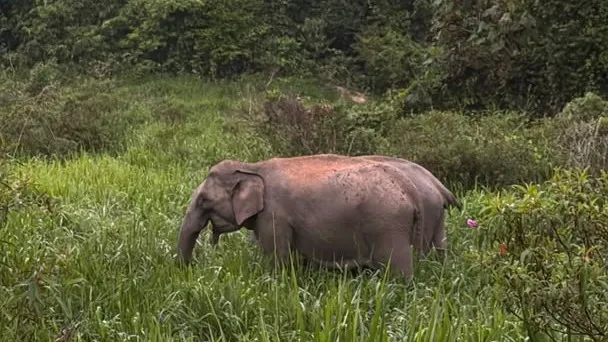
Our understanding of elephant intelligence has grown sharply in recent decades. We now know elephants form deep social bonds. They show empathy, recognise themselves and mourn their dead. They suffer psychologically when denied stimulation, company and space.
As our understanding grows, so should the standards by which we judge how we treat these majestic creatures.
A civilised society is measured not only by how it treats its people but also by how it treats creatures that depend entirely on human decisions for their wellbeing. As the saying often credited to Mahatma Gandhi goes: the greatness of a nation can be judged by how it treats its animals.
Dara, Amoi and Kelat now live far from home. But they remain a test of whether we truly believe that principle.
The questions about their welfare deserve honest answers, not silence. If the concerns are unfounded, say so openly. If they are valid, act on them without delay.
In the end, this is not just about three elephants but about the values by which we choose to be judged.
Joseph Masilamany is a journalist who writes on governance, faith, culture and the moral questions shaping public life in Malaysia. His work often explores the relationship between institutions, conscience and the human spirit.
The views expressed in Aliran's media statements and the NGO statements we have endorsed reflect Aliran's official stand. Views and opinions expressed in other pieces published here do not necessarily reflect Aliran's official position.
- Tegakkan maruah serta kualiti kehidupan rakyat
- Galakkan pembangunan saksama, lestari serta tangani krisis alam sekitar
- Raikan kerencaman dan keterangkuman
- Selamatkan demokrasi dan angkatkan keluhuran undang-undang
- Lawan rasuah dan kronisme
