

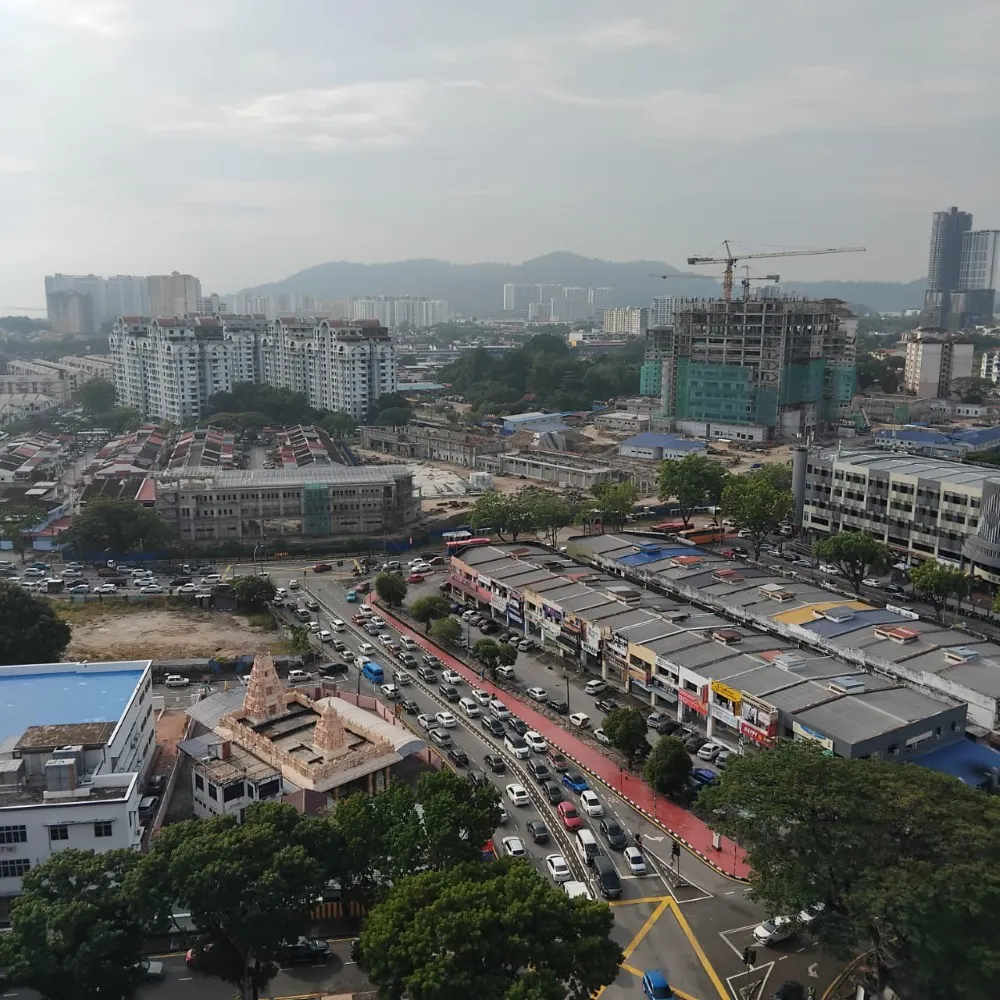
On the morning of Wednesday, 1 April, social media was already filled with complaints about bad traffic across Penang Island.
When I opened the window of my high-floor apartment, I saw it for myself. The entire Sungai Dua township was locked in a standstill.
It was the kind of scene that would drain anyone’s spirit before the workday even began.
I would be depressed if I had to drive in such conditions. Fortunately, I am a utility cyclist. I made my usual trip to work on two wheels, largely unaffected by the congestion.
Along the way, the sharp bursts of honking revealed what the view from above could not fully capture: frustration, impatience and the toll of hours lost in traffic.
By the time I reached my office and switched on my laptop, the cause of the gridlock became clear. A fatal accident involving a motorcycle and a car on the Butterworth-bound lane of the Penang Bridge had brought traffic to a halt.
It was a tragic reminder of how fragile and unforgiving a car-dependent system can be.
- Sign up for Aliran's free daily email updates or weekly newsletters or both
- Make a one-off donation to Persatuan Aliran Kesedaran Negara (ALIRAN), Maybank a/c 507246118995 or CIMB a/c 8004240948
- Make a regular pledge or periodic auto-donation to Aliran
- Become an Aliran member
What unfolded that morning was more than an isolated incident. It was a familiar pattern. In a system built around cars, even a minor breakdown or collision can ripple outwards, disrupting thousands of lives. Commuters who rely on cars are left to bear the risks, delays and uncertainties of a system that offers them few viable alternatives.
A hollow call to cycle
Recent global oil disruptions have only reinforced this vulnerability. While some politicians now encourage cycling as a way to reduce fuel costs, such calls ring hollow without meaningful structural change.
If there was genuine commitment to sustainable mobility, we would already see safer cycling networks, more walkable communities and better integration with public transport. These are not new ideas – civil society has long proposed them.
Yet our roads remain largely hostile to cyclists and pedestrians, even as traffic collisions continue to rise.
Some may believe that a larger or more luxurious car can soften the experience of congestion, while others promote a shift to electric vehicles in response to rising fuel costs.
But these are private solutions to a public problem – ones that will deepen inequality.
Not everyone can afford a car, let alone an expensive one. Meanwhile, all of us share the consequences of car dependence: polluted air, vast amounts of urban space devoted to cars – whether fuel-powered or electric – and significant public funds spent to sustain car-centric infrastructure.
The hidden social costs
Life could be far better with serious investment in alternative modes of mobility. Expanding cycling infrastructure, improving walkability and strengthening public transport would not only reduce dependence on private cars but also make our cities safer, cleaner and more equitable.
Larger cars, and even electric ones, do not solve the underlying problem. They simply reproduce it in a different form.
The financial cost of fuel is easy to calculate. The hours lost in traffic, the stress endured, and the lives cut short on our roads are not. These are the hidden social costs of car dependence.
The path forward
Change is possible, but it requires both collective action and political will. We can begin by rethinking our own travel habits and embracing more diverse modes of mobility.
At the same time, we must continue to demand better infrastructure and policies. Complaining from behind the wheel will not move us forward – but changing how we move just might.
The views expressed in Aliran's media statements and the NGO statements we have endorsed reflect Aliran's official stand. Views and opinions expressed in other pieces published here do not necessarily reflect Aliran's official position.
- Tegakkan maruah serta kualiti kehidupan rakyat
- Galakkan pembangunan saksama, lestari serta tangani krisis alam sekitar
- Raikan kerencaman dan keterangkuman
- Selamatkan demokrasi dan angkatkan keluhuran undang-undang
- Lawan rasuah dan kronisme

Dr Por’s welcome article is a statement of the obvious. What is required immediately is for the Penang state government to take control of RapidPenang from the Federal Finance Ministry and start by doubling the number the number of buses, creating dedicated bus lanes where possible, and reducing or even removing bus fares. The current fuel crisis provides an opportunity (as in several international cities) to limit car travel through offering free public transit immediately.
Please write on the early history of the island in early 19th century. About the origin of early Chinese communities on the island, about gang warfare in 19th century Penang, about the origin of Peranakan Chinese and why they are called so, about Chinese tin mining magnates who chose to settle on the island, and about Siamese-English relations in Penang. Thank you.