

Zulfikar Abdul Aziz
What Penang Chief Minister Chow Kon Yeow said recently at the International Rail Transit Forum 2026 ought to be a red flag for Penang’s elevated light rail (LRT) project.
After years of touting the Penang LRT project as a game-changer and the solution to traffic congestion, Chow said an extensive rail network alone will not necessarily reduce traffic congestion, as the Klang Valley experience showed.
Rail projects need to be supported by effective links, proper planning around stations, and a public mindset change, he pointed out.
Already, there are red flags pointing to a negative outcome in Penang.
Coverage and accessibility
The LRT project from Penang airport to Komtar on the island, with a cross-channel branch to the mainland, covers no more than 20% of Penang’s residential belt.
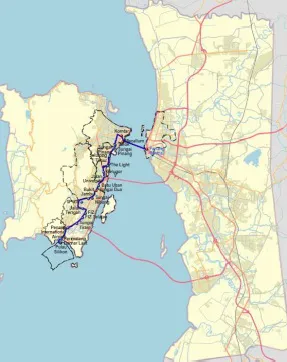
This means the majority of people in Penang will not be able to access it. It risks becoming a very costly showpiece.
- Sign up for Aliran's free daily email updates or weekly newsletters or both
- Make a one-off donation to Persatuan Aliran Kesedaran Negara (ALIRAN), Maybank a/c 507246118995 or CIMB a/c 8004240948
- Make a regular pledge or periodic auto-donation to Aliran
- Become an Aliran member
Journey time matters when people decide how to travel. Bear in mind that all the LRT stations willl be elevated, with heights ranging from 15 to 20 metres from ground level depending on the location.
The new LRT Sentral station on the mainland – which is separate from the existing Penang Sentral terminal – is especially high at 30 metres above ground level (so we were told). This is equivalent to the height of a 10-storey building.
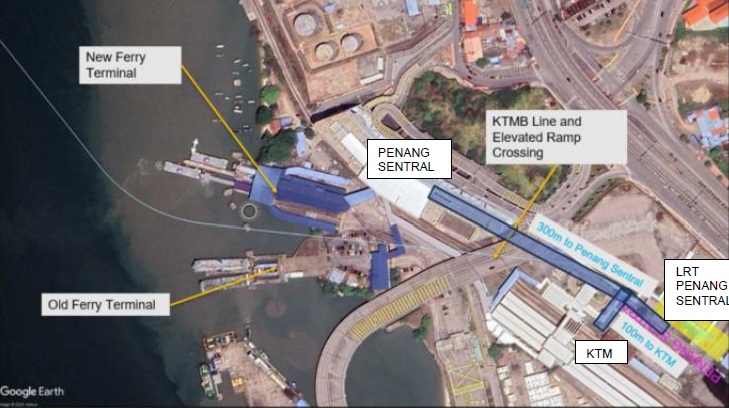
All this adds to travel time, as passengers must make their way up to platform level and then descend at each end of their journey.
The projected ridership is of concern. Data from the official census shows that Penang’s fertility rate has fallen to 1.2 children per woman – the joint lowest in Malaysia, alongside Kuala Lumpur. This is well below the population replacement level of 2.1 and will thus affect future ridership projections.
Poor links
Only four out of 20 stations have park-and-ride facilities, and one of those four caters for two-wheelers only.
It is not realistic to assume that most would-be LRT users live within walking distance of stations. Poor links between stations and people’s homes or workplaces will push many people to stick with their own motorcycles or cars.
A comprehensive plan to address this was not available at MRT Corp’s recent public engagement session at Komtar. Nor is it available online, despite the massive presence of LRT videos on social media. An enquiry to MRT Corp drew the response that the network to improve links from homes and workplaces to the LRT stations is pending.
The Penang airport’s LRT station is 200 metres from the airport terminal building. That is a long haul for travellers with luggage, and worse, for those travelling with children or older people. By contrast, the airport bus stop is just 50 metres from the terminal entrance.
Two LRT stations are meant to serve workers at the Free Industrial Zone in Bayan Lepas. Yet both are poorly located, sitting far from the factories rather than in the midst of them. This industrial zone on the island is one of Penang’s major employment hubs and already suffers severe traffic jams.
The present public transport bus service, together with the single-route ferry service, achieves less than 5% modal share of journeys within the state. This figure has not shifted since 2008, when the current state government came to power. That alone does not inspire confidence in the government’s ability to address Penang’s pressing issue of low public transport use.
Unheeded warnings
During Anthony Loke’s first tenure as transport minister, he visited Penang in September 2018. At a press conference with Chief Minister Chow standing beside him, Loke said his ministry had concluded from studies that the LRT might not be the best option for Penang, and wished to offer the state government other choices.
This view was shaped by his ministry’s first-hand experience with the shortcomings of train-focused solutions in the Klang Valley, and a desire to avoid repeating the same mistake in Penang.
Chow, who served two terms as the state executive councillor responsible for transport, should have seized that moment to review Penang’s pursuit of LRT. He did not.
Penang Forum, a prominent Penang-based civil society coalition, did much of the legwork. It pointed the way towards a comprehensive, sustainable and effective public transport system for the whole state, naming its proposal Better, Cheaper, Faster for what it represents.
The Penang Forum study found there was no need for an LRT system. An alternative mix of buses, ferries, trams and upgraded pedestrian walkways would be the better solution overall.
Penang Forum’s analysis of the low catchment area of the LRT route, the high capital and operating cost estimates, the unrealistic projected ridership figures, the missing plan on how to connect homes and workplaces to LRT stations, and the absence of a cost-benefit analysis all pointed to a white elephant in the making.
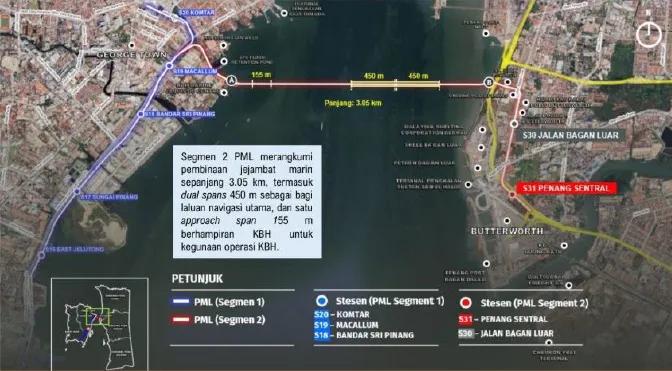
Yet the pursuit continues. It has been made worse by the addition of by a second segment – the branch route from near Komtar on the island to the area in front of the Butterworth railyway station on the mainland.
This segment was added when Prime Minister Anwar Ibrahim gave his approval for the project, which would now be fully funded it by the federal government – on condition that the line extended to the Penang Sentral vicinity in Butterworth. This 3km cross-channel segment alone is estimated to cost RM3bn.
An environmental impact assessment of this segment suggests that port operations could be severely affected in terms of safety risks and productivity losses. This could raise costs, reduce revenue and weaken the competitiveness of the Penang port, a vital transport hub for the northern region and a cash cow for both the state and federal governments.
What should be done now
In the light of CM Chow’s candid admission, Petua suggests the following.
First, the Penang state government should immediately commission a review of the LRT project. An independent, suitably qualified international transportation body should be consulted on the overall viability of the LRT project against other options.
Second, the cross-channel segment should be suspended immediately. The RM3bn already allocated should be redirected to the following areas:
Upgrade the bus system: Penang needs a fleet of around 1,500 buses. The sole public transport operator, Rapid Penang, runs just 300. That is unsustainable. The state government must provide suitable space for an expanded fleet. Using one dedicated lane in each direction on the first Penang bridge as bus lanes would be a practical starting point for trials.
Introduce a second bus operator: Rapid Penang, as a government-linked firm with its headquarters in Kuala Lumpur, lacks the local autonomy to respond quickly. A second operator could cover the mainland while Rapid Penang focuses on the island.
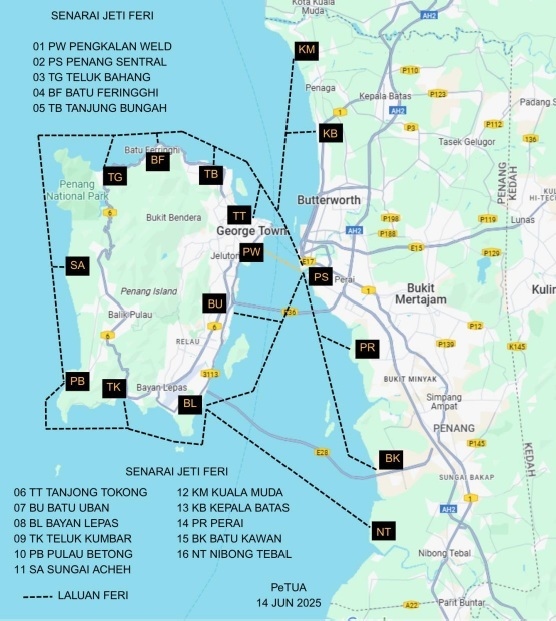
Expand the ferry service: More ferries, more routes and more jetties around the island and along the mainland coast would help. The present ferry service works well, offering a good balance of capacity for passengers and two-wheelers, with short boarding times and a reasonable travel time.
Upgrade pedestrian walkways: Better walkways encourage walking, which is essential to supporting bus and ferry use.
The capital expenditure budget for the LRT project stands at a whopping RM16.8bn. Annual operating costs are expected to exceed RM100m. This is an enormous commitment.
Given the many red flags and objections raised, and the real risk of a white elephant outcome, Chow has a responsibility to be brave and do the morally right thing. He should review the project with transparent data, draw on neutral expertise, and evaluate all options fairly.
A good starting point would be the Penang Forum report from 2009, which has stood the test of time.
Zulfikar Abdul Aziz is the secretary of Petua, the Penang Public Transport Users Association.
The views expressed in Aliran's media statements and the NGO statements we have endorsed reflect Aliran's official stand. Views and opinions expressed in other pieces published here do not necessarily reflect Aliran's official position.
- Tegakkan maruah serta kualiti kehidupan rakyat
- Galakkan pembangunan saksama, lestari serta tangani krisis alam sekitar
- Raikan kerencaman dan keterangkuman
- Selamatkan demokrasi dan angkatkan keluhuran undang-undang
- Lawan rasuah dan kronisme

Sadly, this LRT will be a white elephant in the future, by that time the PIC may be retired.
No matter what public transports are available, the network will be limited in future, it wont solve this chronic traffic congestion in Penang as no one is controlling the population of vehicles on the road, expanding roads and number of parking spaces while approving new highrise buildings in town, this is the minimum requirement in order to relieve the frustrations of Penang langs, not considering any effort by gov to control the number of vehicles coming to the island during peak hours, festivals & Event Days. Those PICs had visited S’pore and HK in the past to evaluate theirtraffic planning, what did they learn?
“Rail projects need to be supported by effective links, proper planning around stations, and a public mindset change”, CM pointed out.
The klang valley having failed to solved it’s congestion problem inspite of having 13 train lines by now is bec of underinvestment in FLM, (first last mile) issues and a robust bus network.
Now that the CM has acknowledged this setback, so what are we waiting for if at all the Mutiara lrt will be up and running by yr2031?
Penang’s FLM and bus network is in shambles and not any different from the Klang valley and the rest of the country.
20-30 years ago, we only need mini buses to reach all parts of the island. For the past 15 years or more, the state government has taken away many bus routes such as gottlieb road, gurney drive, botanical garden etc. Peng Hwa school bus stops are still there but there are no buses that ply through the schools. How could traffic jams be reduced when there are no buses to take students back home? No wonder parents have to fetch the students one by one. It’s a disgrace an island with so many MNCs is not putting effort on public buses — how could any fresh grad could travel to work in MNCs which are mainly populating in Byn Lps FTZ? A young fresh grad staying in Air Itam cannot reach Byn Lps by bus- there’s no bus. Worst bus system in Mainland
The LRT stations mostly serves high end, luxury area and cater for tourists. Wait another 50-60 years for full connectivity. I won’t be around then, might be in nursing home or the Nirvana.
Penang government needs to plan how to make rapid bus stop lane for rapid bus to stop and not to allow rapid busses to stop at the side of the road and disrupt the traffic flow
A survey by Han Chiang College asked “Reason for (NOT) considering taking LRT from Georgetown to Butterworth ?”. My answer : ” I like most bus users of high density routes 101 201 202 203 204 304 etc walk 5 minutes from Jetty Bus Terminal to actual Ferry and another 5 minutes from Ferry to Pg Sentral entrance or KTM station (not counting the waiting time for lift). Highly inconvenient to take LRT where stations are in Macallum and Butterworth LRT 10 stories station down slow escalator or lifts then walk hundreds of meters to KTM or Pg Sentral
Maybe we want to consider covered walkelaters along the footpaths for the Last Mile from the Station or independently around the island.