

M Santhananaban
In 2009, Malaysia set up the Malaysian Anti-Corruption Commission, scrapping older anti-corruption laws for tougher legislation on white-collar crime and money laundering.
New institutions to uphold accountability and transparency followed soon after.
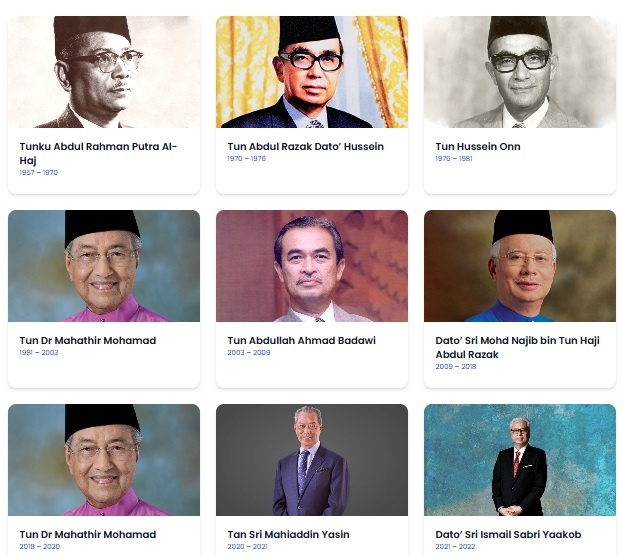
Seventeen years on, that reform looks like it has achieved little at the very top. A few of our eight former prime ministers are now facing, or have faced, serious criminal charges – and Najib Razak, who set off this reckoning, completes four years as a prisoner this weekend.
That is a shameful record for Malaysia.
Tainted leaders
The former prime ministers now before the courts belong to the post-war, baby boomer generation. All are from the peninsula.
They were taught to be clean, patriotic, trustworthy and transparent during their political apprenticeships. Their own party pushed through the very laws meant to guard against people like them.
- Sign up for Aliran's free daily email updates or weekly newsletters or both
- Make a one-off donation to Persatuan Aliran Kesedaran Negara (ALIRAN), Maybank a/c 507246118995 or CIMB a/c 8004240948
- Make a regular pledge or periodic auto-donation to Aliran
- Become an Aliran member
Yet these tainted former prime ministers appear to have fallen well short of these standards.
Outsized power
The Royal Commission of Inquiry into Tabung Haji, released on 29 July, contains some telling findings about the role of the prime minister.
On page 29, the report recommends an independent panel (badan penasihat bebas, or independent advisory body) to advise the PM on appointments to the Tabung Haji board. It is a polite suggestion, carefully worded.
But the report does not shy away from the obvious. The prime minister of the day ultimately shapes the character and direction of Tabung Haji. This principle should arguably apply to all prime ministerial appointments, including those to government-linked investment companies (GLICs) and government-linked companies (GLCs).
This careful language points to a serious flaw in how Malaysia is governed at the top. The office of the prime minister has become too powerful and too overbearing.
Through nominated directors, the prime minister’s office has an outsized presence across most government-linked firms, especially the investment companies. That grows more pronounced when the prime minister also holds the finance portfolio.
The conduct of the sixth prime minister, based on findings by two separate High Court judges – Justice Mohd Nazlan Mohd Ghazali and Justice Collin Lawrence Sequerah – exposed the vast, largely unchecked power of a sitting prime minister.
The Tabung Haji royal commission has since underlined the same point. The prime minister looms unusually large over Malaysia’s governance structure.
Since the late 1980s, Malaysia’s system has grown increasingly prime minister-centric. The office has taken on an authority far beyond what was intended. It was meant to be ‘first among equals’ in cabinet, not a dominant figure above it.
Given this concentration of power, a prime minister who is not exceptionally disciplined can come under enormous pressure. We also now know that even a former PM’s spouse became an influential player, allegedly having a say on appointments and large public projects.
The risk grows sharper still when a prime minister also holds a powerful ministry such as defence, finance or home affairs.
How that power gets abused
In Malaysia, it is well established that those advising or influencing the prime minister, beyond the ruling party’s inner circle, are often compliant civil servants and co-opted technocrats.
They are expected not just to obey but to accommodate the PM’s wishes, sometimes stretching the rules to do so.
One striking example: the former chief secretary to the government admitted he accepted a RM30,000 monthly allowance for a 1MDB advisory role in which he had no actual duties. This is not an allegation; it is an admitted fact, recorded in court.
Today, the prime minister holds significant control over top civil service appointments, along with government-linked firms and investment companies that together control roughly 45% of the equity of listed companies on Bursa Malaysia.
This looks more like the power of a presidential system than of Malaysia’s Westminster-style democracy. Is it right to concentrate so much power in one office?
Parliament, too, has the authority to pass laws – laws that a prime minister with a two-thirds majority can shape to their advantage. A prime minister can also appoint defeated election candidates as senators, then elevate them to senior cabinet posts.
What is clear from the Sequerah and Nazlan judgments, and from the Tabung Haji royal commission, is the scale of financial leakages, fraud and, at times, gross negligence in managing public funds.
These problems enmeshed the highest office in the land. They raise real questions about how far Malaysia has strayed from sound principles of accountability and good governance.
Most of those implicated in incompetence or abuse of office sit at the elite level, often close to the prime minister. Abuse of office has become a troubling affliction, especially among several of Malaysia’s most senior figures.
Two significant damages claims have been upheld by the courts in recent years, against former top executives of Sime Darby and Mara Corp. They point to a wider problem. Some senior executives appear overly confident about bending the rules, perhaps believing their organisations are too big to be held to account.
Taken together, these cases suggest Malaysia has, for now, lost ground in the fight against corruption and white-collar crime. The current government has popularised the word sakau’ (plunder) to describe this culture, and it has stuck.
Malaysia must move on from such tainted former leaders. Political parties hoping to field prime ministerial candidates must insist on integrity and accountability. We have had more than enough sloganeering leaders.
But containing the prime minister’s powers is not the whole answer. In Malaysia, abuse of power is not confined to the top office – it appears to run through the system, from the cabinet room to the clerk processing a licence application in a back office.
What Malaysia needs now
That raises two harder questions.
Would restricting the prime minister’s powers actually change this culture or simply push it elsewhere?
And could tighter checks make a prime minister less effective at the moments when swift, decisive action is genuinely needed?
Malaysia has not yet answered either question. But they should sharpen the argument for containing the powers of the office, not weaken it.
Malaysia needs a genuinely capable leader, not a saint, but someone who could, in time, be remembered as a statesman.
One prime minister who came close was Hussein Onn – soldier, lawyer and statesman – who moved unassumingly into his predecessor’s modest official residence and ran the country on a tight budget. He was known for his honesty, humility and humanity.
Can someone in that mould step forward soon?
Curbing the prime minister’s powers alone will not fix a culture of abuse that runs deeper than one office. But it is a reform Malaysia can no longer afford to postpone. Let us hope Malaysia’s future is a bright one.
Dato’ M Santhananaban is a former Malaysian ambassador with over 45 years of public sector experience.
The views expressed in Aliran's media statements and the NGO statements we have endorsed reflect Aliran's official stand. Views and opinions expressed in other pieces published here do not necessarily reflect Aliran's official position.
- Tegakkan maruah serta kualiti kehidupan rakyat
- Galakkan pembangunan saksama, lestari serta tangani krisis alam sekitar
- Raikan kerencaman dan keterangkuman
- Selamatkan demokrasi dan angkatkan keluhuran undang-undang
- Lawan rasuah dan kronisme
