The rhetoric is loud and clear. It is back to ‘basics’, with race and religion unfortunately as the core issues.
Perhaps only Bersama, PKR and DAP are making an appeal with Johor’s long-term interests at heart.
Take the menteri besar. He shows himself to be little more than a puppet, with little understanding of his own state. He does not seem to understand its people or its relationship with its neighbours.
Then there are the long-time stalwarts and warlords of Umno and Barisan Nasional (BN). They talk of going it alone, hoping to form the state government on their own. Perhaps they hope Johor could provide a war chest for the next general election.
Who in their right mind would vote for a party like this, unless blinded by race? That mindset produces a menteri besar who says he will not work with the DAP. Does he not realise that almost 40% of Johor’s voters are from the ethnic minorities? How does he think they feel about that statement?
- Sign up for Aliran's free daily email updates or weekly newsletters or both
- Make a one-off donation to Persatuan Aliran Kesedaran Negara (ALIRAN), Maybank a/c 507246118995 or CIMB a/c 8004240948
- Make a pledge or schedule an auto donation to Aliran every month or every quarter
- Become an Aliran member
Many will recognise this as the same old mould of leaders. They spoke of the Rukun Negara (national principles), ‘Vision 2020’ and ‘1Malaysia’, all preaching unity. But they lacked the capacity and the mindset to carry this agenda forward. These are the failed leaders who gave us hope, then stole from us in broad daylight.
When push comes to shove, these ethnic zealots retreat into their own ethnic corners. How insensitive can you be when you do not even appreciate that others also have feelings.
The people of Johor should remember that the state’s success is tied closely to its neighbour, Singapore.
Singapore’s shadow
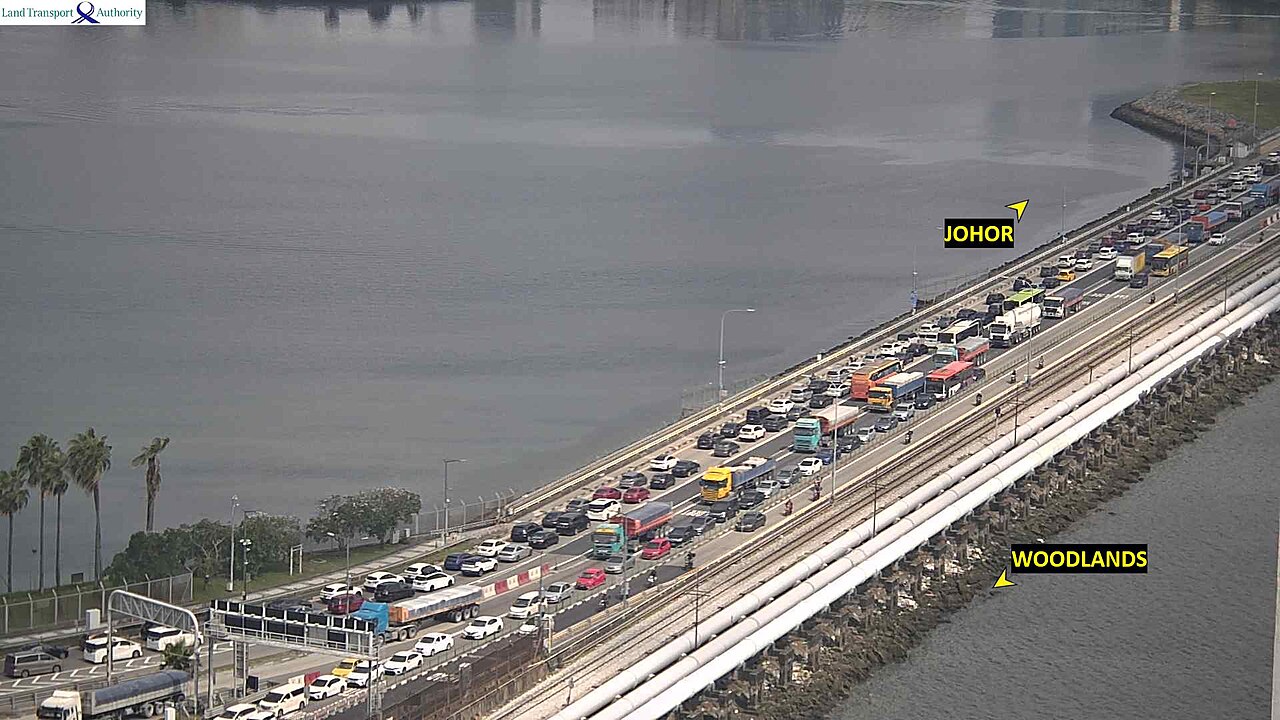
Over 300,000 people cross from Malaysia into Singapore every day for work. Around 70% of them come from Johor. They earn roughly three times what they would at home. Close to RM20bn in household income flows back into Johor each year.
Singaporeans also invest heavily in Johor, in retail, healthcare, education and property. Demand linked to Singapore accounts for nearly 30% of new property launches in Iskandar Puteri. Altogether, this is estimated to make up at least 20% of Johor’s gross domestic product (GDP).
So what would all these investors, manufacturers and traders make of the menteri besar’s reckless statement? Under Umno-BN’s leadership, there is no alternative source of investment to replace Singapore. Singapore has remained Johor’s top investor for years.
Yet why has the current Umno-BN leadership not grasped this reality? No one is stealing from them. The cake is big, and getting bigger. Now, it is about sharing it fairly. When neighbours prosper together, everyone wins.
Imagine if the menteri Besar had said something different instead: “We will work with all parties to keep Johor’s progress going. A vote for us is a vote for progressive politics and for good relations with all of Johor’s people and our neighbours, whatever their ethnicity.”
Somehow, Umno-BN’s mindset seems incapable of that leap. That is why the MCA and the MIC remain little more than puppets under Umno.
A divided ethnic Malay electorate does not help either. Umno’s traditional base has eroded since the 1MDB scandal and the last two elections.
The maths of division
Take a look at the numbers. If Umno loses 10% of the Malay vote to Perikatan Nasional, Pas, Amanah, PKR and others, and loses 80% of the ethnic minority vote, then holding even 15 seats could prove a struggle. (Umno won 17 seats in the 2018 state election and 33 in 2022).
Three-cornered fights and the first-past-the-post system remain challenges that Umno-BN may have underestimated.
In a state where the minorities make up 40% of the electorate, and where the economy depends heavily on Singapore, ruling out the DAP is akin to pushing more of them to that party.
After over six decades since the formation of Malaysia, why has Umno-BN’s mindset never shifted? It seems to need a sense of victimhood to win support. If none exists, one gets created.
During Dr Mahathir Mohamad’s 22 years of autocratic rule, Umno leaders did as they pleased. Many look back on those years hoping to replicate them.
But times have changed, even if that locked-in mindset still traps today’s Umno leaders.
I am no astrologer or political pundit, but I believe you reap what you sow. A negative mindset rarely produces a positive result, so I expect Umno-BN will have to face a new reality after the polls.
One caveat matters, though: voter turnout.
If turnout is high, and Pakatan Harapan can mobilise the Chinese Malaysian diaspora and Johor-Singapore commuters to vote, that would favour the progressive alternative parties.
If turnout is low, it could tilt things towards rural Malay voter loyalty, favouring the Umno-BN alliance.
When politicians manipulate ethnicity or religion for votes, they invariably end up promoting injustice and unfairness. They hurt the very people who might otherwise have supported the cause of unity.
We could look to Singapore and learn how it manages ethnic relations. But perhaps pride stops us from doing that.
AGENDA RAKYAT - Lima perkara utama
- Tegakkan maruah serta kualiti kehidupan rakyat
- Galakkan pembangunan saksama, lestari serta tangani krisis alam sekitar
- Raikan kerencaman dan keterangkuman
- Selamatkan demokrasi dan angkatkan keluhuran undang-undang
- Lawan rasuah dan kronisme