


Imran Mohd Rasid
Attending the Penang Peace Dialogue 2026 last weekend – a gathering organised by the Commonwealth of World Chinatowns (CWC) – was truly inspiring.
It is not every day that you find Victor Gao, Kishore Mahbubani, Jomo Kwame Sundaram, Wang Sheng-Wei, Jeffrey Sachs and Gita Wirjawan, among many other prominent voices, sharing the same stage to reflect on the state of the world.
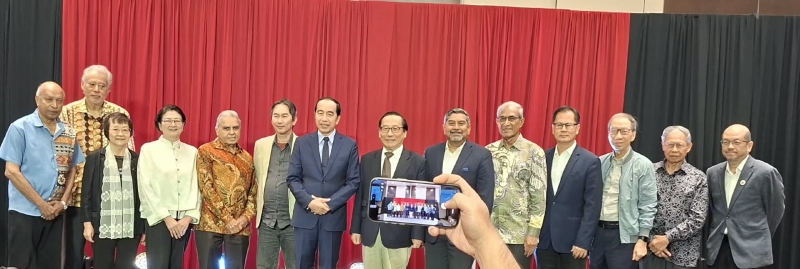
The term Bandung Spirit or the Bandung Conference, referring to the historic Afro-Asian Conference held in Bandung in 1955, was referenced aptly in various panels.
While truly elated by the constant reminders of Bandung, I reminded myself that the world of 1955 is obviously different from the world we inhabit today.
How, then, do we remember Bandung? Not as an exercise in romanticising history, but as a source of lessons for confronting today’s challenges. To honour the Bandung Spirit, we must ground its lessons in the turbulence of our own time.
Bandung was never just states

It is important to remember that while the 1955 Bandung Conference captured the converging forces of decolonisation and the Cold War, the broader ‘Bandung era’ cannot be reduced to a single conference of state actors.
- Sign up for Aliran's free daily email updates or weekly newsletters or both
- Make a one-off donation to Persatuan Aliran Kesedaran Negara (ALIRAN), Maybank a/c 507246118995 or CIMB a/c 8004240948
- Make a regular pledge or periodic auto-donation to Aliran
- Become an Aliran member
More importantly, the Bandung era was built on much older traditions of anti-imperialist struggle, involving not only political leaders but also activists, intellectuals, artists, students and women’s movements. They came together to end colonialism, envision more equitable social orders and secure a lasting peace.
Even before Bandung, the 1947 Asian Relations Conference in New Delhi sought to build continental unity and cooperation.
In 1949, the Conference of Asian Women in Beijing brought together 199 delegates from people’s movements, political parties and women’s organisations across 23 countries to assert the role of women and feminist internationalism in the struggle against imperialism.
Just days before Bandung in 1955, the Delhi Conference – sometimes called the ‘People’s Bandung’ – mobilised thousands of delegates, activists, writers and artists around decolonisation and nuclear disarmament.
And after Bandung, the movement continued. Gatherings such as the 1956 Afro-Asian Students’ Conference, the 1958 Asian-African Women’s Conference in Colombo, and the first Asian-African Writers Conference in Tashkent kept it alive.
The important lesson is that the Bandung Spirit was never kept alive by states alone. If we are serious about renewing the Bandung agenda in today’s fragmented world, we cannot wait for state leaders to act. The work must start with people’s movements across sectors and borders.
Sovereignty and justice too
Popular recollection has often mistakenly reduced the Bandung Conference to a simple plea for global peace.
In reality, the meeting was fundamentally about Southern nations asserting their sovereignty and demanding greater economic justice.
The Dasasila, or Ten Principles, adopted at Bandung made this vision clear: strict national sovereignty (demanding an end to Dutch, British, French, Portuguese and American intervention), reaffirming the UN Charter, anti-racism, and domestic economic development.
Anticolonial leaders such as Sukarno, Jawaharlal Nehru and Gamal Abdel Nasser understood that colonialism – and its continuation in new forms within the international system – constrained the ability of Southern nations to develop.
Colonialism had forced people across Asia, Africa and Latin America to labour on their own lands while the wealth they produced was extracted to enrich Europe and North America.
Research by Utsa and Prabhat Patnaik, for instance, estimates that Britain drained nearly US$45tn from India between 1765 and 1938.
Malaya, meanwhile, became one of the British Empire’s most profitable colonies, contributing significantly to Britain’s post-war reconstruction.
Stopping this unequal extraction was therefore central to the broader Bandung project. This agenda later found expression in the UN General Assembly’s 1974 resolution on a New International Economic Order – an effort the Global North later blocked.
The problem has hardly disappeared. Today, many Global South countries remain trapped by debt. They also face technological and global value-chain dependence, and unequal terms of trade. Restrictive intellectual property regimes, food insecurity, climate finance injustice and shrinking industrial policy space compound the problem.
To invoke the Bandung Spirit today, therefore, is not simply to call for peace. It is to insist that the Global South has a right to development: to process its own resources, build its own industries, develop its own technological capabilities and determine its own economic future.
The right to be heard
There is no doubt that the post-Bandung era gave newly independent nations the right to speak on the global stage. But the right to speak is insufficient if we are denied the right to be heard.
During the Penang Peace Dialogue, there was an important discussion on the severe democratic deficit of the UN Security Council. Three of the five permanent, veto-wielding members are former or current colonial powers: the US, Britain and France.
Demographic giants like Africa and Latin America are completely excluded from permanent representation.
As a result, the Global South lacks the institutional power to make its collective voice count. Prevailing economic powers blocked the 1974 UN resolution on a New International Economic Order.
Repeated UN votes against the blockade of Cuba and in support of Palestinian rights have similarly failed to translate into meaningful action.
Our lack of structural power leaves us helpless to stop genocides, illegal bombardments and economic warfare. It gets worse in the age of Trumpism, which has seen a vehement attack on multilateralism and its institutions.
The Bandung-inspired agenda today must therefore confront this challenge head-on: defending and strengthening multilateralism as a space for peace, development and international cooperation.
Moral appeals alone are insufficient. The South’s voice must be backed by institutional power through a more inclusive and equitable multilateral order.
A means, not an end
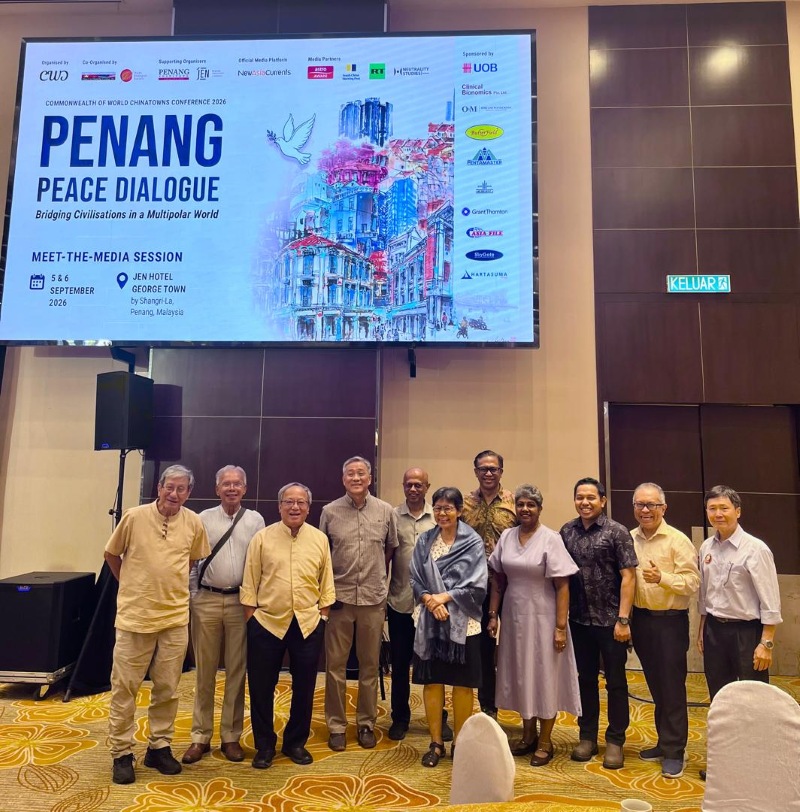
Peace dialogues do not solve conflicts or mobilise the world overnight. Their value lies in something more subtle: reframing narratives, reducing demonisation and building confidence among states and the public.
What struck me most while listening to the conversations at the Penang Peace Dialogue 2026 was a quiet sense of confidence growing in the room.
There was a belief that Asia and the Global South can – and must – play a greater role in shaping the global agenda.
This new mood reflects a growing refusal to be dictated to by Western powers.
The Bandung story offers a useful political and inspirational tool for reasserting our narratives in a changing world.
This was reflected in the chant at the Penang Peace Dialogue: “From Bandung to Penang”, with the latter city touted as a vibrant possible venue for reviving the Bandung Spirit.
But this spirit must be grounded in today’s concrete challenges – or risk becoming mere nostalgia. We cannot afford that.
Imran Mohd Rasid is the executive director of Citizen’s International, a civil society group based in Penang pursuing peaceful coexistence and global cooperation in a just world.
The views expressed in Aliran's media statements and the NGO statements we have endorsed reflect Aliran's official stand. Views and opinions expressed in other pieces published here do not necessarily reflect Aliran's official position.
- Tegakkan maruah serta kualiti kehidupan rakyat
- Galakkan pembangunan saksama, lestari serta tangani krisis alam sekitar
- Raikan kerencaman dan keterangkuman
- Selamatkan demokrasi dan angkatkan keluhuran undang-undang
- Lawan rasuah dan kronisme
