
WWF-Malaysia
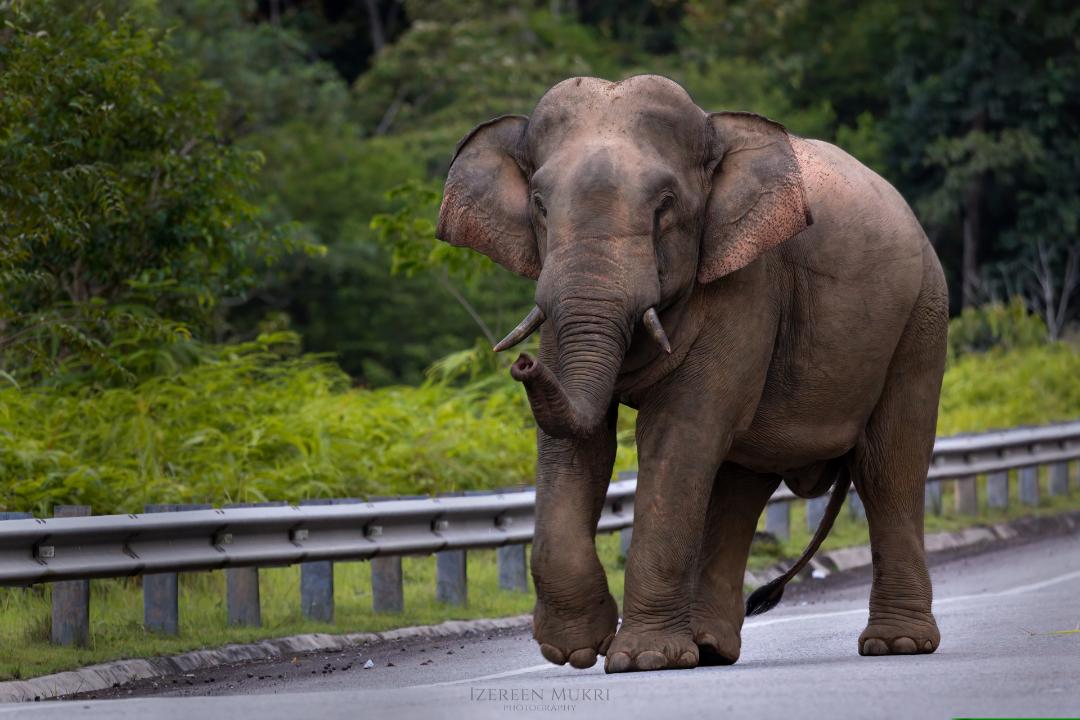
Road and highway developments that pass through forested and ecologically sensitive areas can affect road safety, wildlife and ecosystems across Malaysia.
As infrastructure expansion accelerates, the need to integrate biodiversity considerations early in planning and design has become increasingly urgent to enhance human-wildlife coexistence, reduce risks to road users, and avoid irreversible environmental impacts that are costly to address later.
Highways must therefore be designed not only for connectivity and economic growth, but also to protect human safety and the natural environment.
Notably, the Sabah Wildlife Department has also highlighted the need for a more inclusive and consultative planning process to ensure that environmental and biodiversity considerations are integrated from the very beginning of road development.
- Sign up for Aliran's free daily email updates or weekly newsletters or both
- Make a one-off donation to Persatuan Aliran Kesedaran Negara (ALIRAN), Maybank a/c 507246118995 or CIMB a/c 8004240948
- Make a pledge or schedule an auto donation to Aliran every month or every quarter
- Become an Aliran member
Recent incidents highlight the real and immediate consequences of these challenges. The collision involving a motorcyclist and a Malayan tapir along the East Coast Highway 2 (LPT2) last week is again a stark reminder that wildlife–vehicle collisions pose risks to road users, in addition to threatening vulnerable wildlife.
Such incidents point to wider gaps in the planning and design, particularly where roads intersect wildlife habitats and corridors.
Similarly, this concern was also recently highlighted by the Malaysian Nature Society (MNS), which emphasises the importance of research-driven and environmentally responsible highway planning.
As MNS highlighted, “a thorough study must be conducted before construction begins on Phase Four of the East Coast Highway (LPT4) to address wildlife safety and potential risks to motorists.”
The situation reflects a broader pattern observed across the country and reinforces the importance of adopting consistent, science-based approaches nationwide.
Biodiversity should not be treated as an afterthought at later stages of the planning cycle, such as during the environmental impact assessment stage. By then, the project budget has already been determined, which makes it difficult to implement biodiversity-related mitigation measures, as these usually incur significant cost and time.
Early, evidence-based planning helps to prevent these avoidable impacts while ensuring roads meet societal and economic needs.
In parallel with structural measures such as wildlife crossings, highway developers must take into consideration the establishment of strategically located rest areas for road users, especially heavy vehicle drivers, who are often active at night.
This helps prevent vehicles from stopping near wildlife crossings, where noise, headlights, and idling engines can deter animals from using these passages, thereby undermining their purpose of facilitating safe wildlife movement and reducing human–wildlife conflict.
Observations along the Gerik–Jeli Highway, where heavy vehicles have been seen resting near the wildlife viaduct at night, illustrate how such disturbances may adversely affect wildlife behaviour in the surrounding area.
WWF-Malaysia has contributed to efforts related to responsible highways through partnerships that support the integration of biodiversity considerations into infrastructure planning.
In collaboration with Aurecon Lestari Sdn Bhd, and with strong support from the Ministry of Natural Resources and Environmental Sustainability as well as the Ministry of Works, a training module titled Green Roads & Highways: Protecting Biodiversity was developed to guide industry stakeholders in practical approaches to biodiversity-friendly planning.
Building on this, and with funding from the Ministry of Finance under the National Budget 2022, WWF-Malaysia with Aurecon Lestari Sdn Bhd, also produced a checklist tool to incorporate biodiversity budgeting in road and highway projects, addressing common challenges such as road alignment with sensitive areas and budgeting for wildlife mitigation measures, including culverts, viaducts and monitoring programmes.
Additionally, WWF-Malaysia is actively working with corporates and associations as part of our industry outreach programme aimed at promoting safer driving behaviour along the Gerik-Jeli highway, a known hotspot for such incidents.
These initiatives show that industry players, corporates and associations can play significant roles in disseminating awareness messages to their members, and we call for more to also make such commitments.
WWF-Malaysia believes that with evidence-based planning and collaboration across sectors, Malaysia can build highways that deliver connectivity and economic benefits without compromising our natural heritage. – WWF-Malaysia
AGENDA RAKYAT - Lima perkara utama
- Tegakkan maruah serta kualiti kehidupan rakyat
- Galakkan pembangunan saksama, lestari serta tangani krisis alam sekitar
- Raikan kerencaman dan keterangkuman
- Selamatkan demokrasi dan angkatkan keluhuran undang-undang
- Lawan rasuah dan kronisme
