

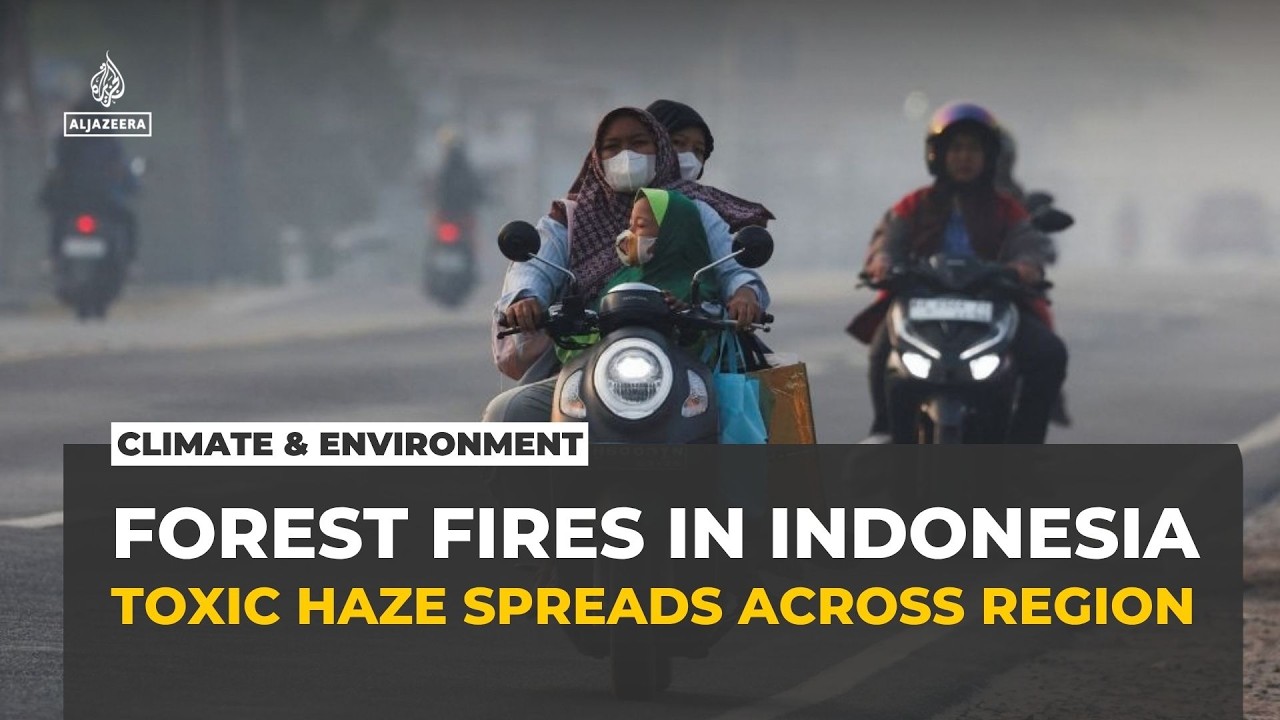
Engage (The Rakyat in Action!) and Project Stability and Accountability for Malaysia (Projek Sama) express deep concern over the handling of the present haze crisis, particularly the confusion surrounding school closures in Johor and across Malaysia.
The haze is a serious public health threat. Children, older people, people with asthma and heart disease, outdoor workers, and families without safe indoor environments face real and immediate risks.
The situation demands urgency, compassion and decisive action.
However, concern alone is not enough. Malaysia needs a coherent, science-based and accountable system for managing haze – not a series of overlapping announcements, changing thresholds and last-minute closures that leave parents, schools and employers scrambling.
The past week [before 13 October] illustrates the problem. Schools were initially told to close when the Air Pollutant Index reached 200. Batu Pahat schools were then closed after the API reached 203. Subsequently, schools across Johor were ordered closed for two days.
Later, a lower threshold of 150 to 180 was raised as a basis for closure where unhealthy readings persisted, while the Ministry of Education announced a different operational threshold: closure above 180, or after three consecutive days above 150.
Johor then extended statewide closures, while private schools were reportedly given discretion over whether to open.
- Sign up for Aliran's free daily email updates or weekly newsletters or both
- Make a one-off donation to Persatuan Aliran Kesedaran Negara (ALIRAN), Maybank a/c 507246118995 or CIMB a/c 8004240948
- Make a regular pledge or periodic auto-donation to Aliran
- Become an Aliran member
Each decision may have been made with good intentions. But together, they have produced uncertainty over a basic question: who is authorised to make the final decision, using what criteria, and with what notice?
This lack of coordination has consequences.
When a school closes suddenly, the impact does not fall on the school alone. Parents must take leave, arrange childcare or miss work altogether. Businesses lose staff at short notice and must absorb the disruption. Daily-wage earners may lose income immediately.
Some families have children in different types of schools – government, private, international, religious or kindergarten – each subject to different announcements.
We must also recognise that “stay at home” is not always a safer or easier option. Many low-income households do not have air-conditioning, air purifiers or well-sealed homes. In some cases, children may be exposed to air that is no better than that in a properly managed school. Online learning is also not equally accessible to every family.
A closure policy must, therefore, be accompanied by practical support, not simply an instruction to stay home.
The issue is not whether schools should close. They should close when the evidence shows that it is necessary to protect children and education workers.
The issue is how such decisions are made. School-closure decisions should be based on transparent technocratic criteria: air-quality readings, duration of exposure, particulate matter, weather forecasts, indoor-air conditions, health-risk assessments and local circumstances.
The public should know the thresholds in advance.
Schools should know what preparations are expected of them.
Parents and employers should receive clear notice, preferably by a fixed time the day before, except in a genuine emergency.
The haze itself is not an unexpected disaster. It is a recurring, cross-border crisis that threatens both immediate and long-term health. Malaysia has faced it repeatedly, yet we still respond as though each episode were unprecedented.
Political leadership is now urgently needed.
First, Malaysia must press Asean for stronger and more effective regional action. The annual cycle of forest and peatland fires cannot be addressed by polite statements alone.
Asean governments must coordinate prevention, fire suppression, satellite monitoring, enforcement, disclosure of concession ownership, and action against companies that profit while others bear the health and economic costs.
Second, Malaysia should enact a robust transboundary haze law, in line with recommendations of the Malaysian human rights commission Suhakam in its 2025 report ‘Silent enemy: Haze pollution and the right to clean air’.
Malaysian companies, investors and beneficial owners linked to fires in Indonesia or elsewhere should face legal consequences at home.
The law should require due diligence, transparent supply chains, and public disclosure of corporate ownership and land concessions.
It should also allow affected people – including citizens, workers, businesses and communities – to bring civil or class-action claims against Malaysian-linked entities whose conduct contributes to transboundary pollution.
Third, the government should establish and empower a permanent national haze operations room or equivalent coordinating body.
It should bring together the Ministry of Health, Ministry of Education, Department of Environment, disaster management agency Nadma, Meteorological Department, state governments, local authorities and relevant enforcement agencies.
It should have one public dashboard, one authoritative daily briefing, one set of nationally understood risk levels, and clear delegated authority for local action.
Its responsibilities should include health surveillance, school and workplace guidance, protection for outdoor workers, distribution of protective equipment to vulnerable communities, and coordinated communication with employers and educational institutions.
In a democracy, decision-makers must be accountable to those who bear the consequences of their decisions.
As seen in Donald Trump’s America, tough and spontaneous decisions driven by populist whim – dismissive of scientific reasoning and democratic oversight -may offer a veneer of decisive action, but they frequently lead to policy failure.
Public policy decisions must be made transparently and in an evidence-based manner, overseen by elected officials whom the people can fire.
No parent should have to rely on rumours, social media posts or conflicting announcements to decide whether it is safe to send a child to school.
No teacher should be left uncertain whether to report for duty.
No employer should be informed of a statewide closure only after staff have already made plans.
The haze is an environmental crisis, a public health crisis, an economic crisis and a governance test.
Malaysia must respond with urgency – but also with order, clarity and accountability. – Engage / Projek Sama
The views expressed in Aliran's media statements and the NGO statements we have endorsed reflect Aliran's official stand. Views and opinions expressed in other pieces published here do not necessarily reflect Aliran's official position.
- Tegakkan maruah serta kualiti kehidupan rakyat
- Galakkan pembangunan saksama, lestari serta tangani krisis alam sekitar
- Raikan kerencaman dan keterangkuman
- Selamatkan demokrasi dan angkatkan keluhuran undang-undang
- Lawan rasuah dan kronisme
