

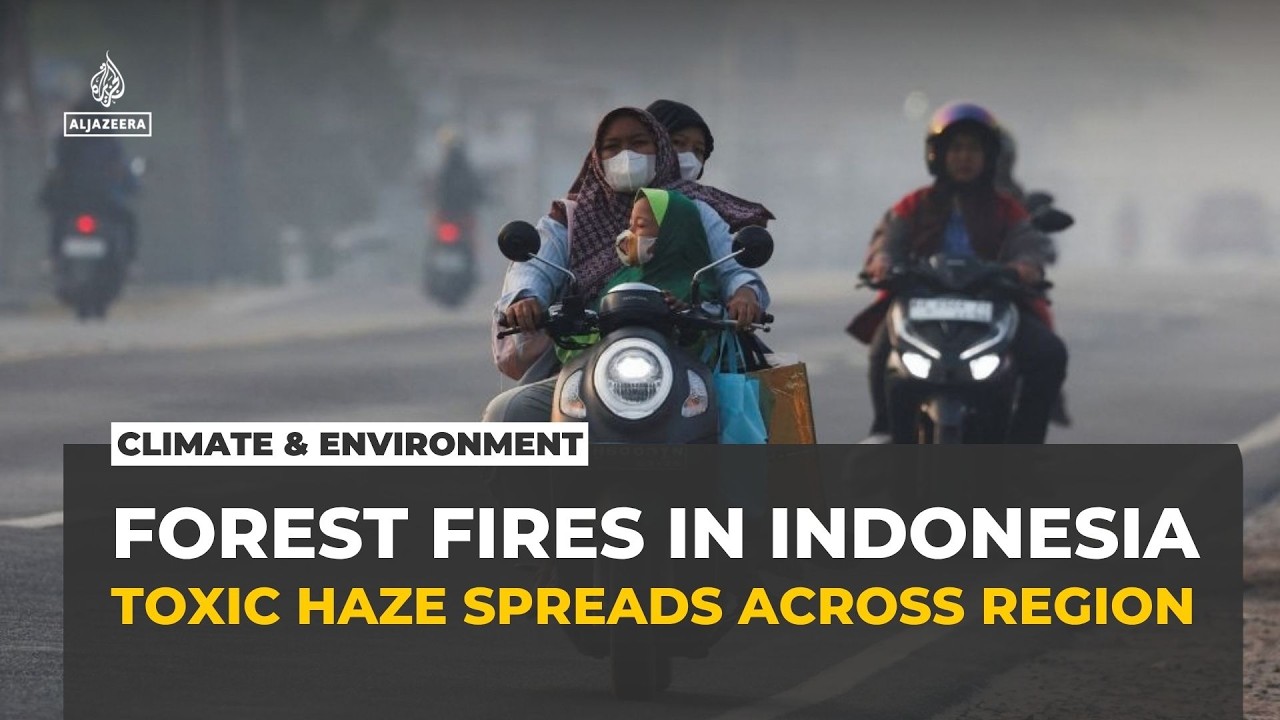
We, the members of G25, express our deep concern over the recurring transboundary haze affecting Malaysia and other parts of Southeast Asia.
The persistence of this problem, despite decades of regional cooperation and repeated governmental commitments, demands renewed urgency and a stronger collective response.
Haze should not be accepted as inevitable. Its continued recurrence raises serious questions about the implementation of existing commitments and the resolve to address its underlying causes.
The haze is not merely an environmental inconvenience. It poses a serious threat to public health, disrupts education and economic activity, and diminishes the quality of life of millions of people, particularly children, older people and those vulnerable to respiratory and cardiovascular illnesses.
Exposure to fine particle matter is associated with respiratory and cardiovascular disease, and emerging research suggests that some health effects may persist beyond the period of exposure.
Governments must treat haze prevention as an investment in public health, and not simply as an environmental obligation. Clean air is essential to their health and wellbeing. The people of Southeast Asia should not have to accept the recurring haze as an unavoidable feature of life.
We recognise the importance of friendly relations among Asean member states, mutual respect for national sovereignty and the principle of non-interference.
- Sign up for Aliran's free daily email updates or weekly newsletters or both
- Make a one-off donation to Persatuan Aliran Kesedaran Negara (ALIRAN), Maybank a/c 507246118995 or CIMB a/c 8004240948
- Make a regular pledge or periodic auto-donation to Aliran
- Become an Aliran member
However, these principles should reinforce, rather than impede, practical cooperation in addressing environmental problems that transcend national boundaries.
National sovereignty carries a responsibility to ensure that activities within a country’s jurisdiction do not cause serious harm beyond its borders. Respect for sovereignty must go hand in hand with accountability for transboundary environmental damage.
The Asean Agreement on Transboundary Haze Pollution, signed in Kuala Lumpur on 10 June 2002 and ratified by all Asean member states, and Asean’s Haze-free Roadmap 2023-30 provide an important framework for regional action.
What is needed now is not simply further commitments, but stronger implementation, clearer accountability and measurable improvements on the ground.
We, G25, therefore call upon Asean member states to:
- Strengthen prevention and enforcement against illegal burning and other activities responsible for forest and land fires, including investigating and, where appropriate, prosecuting those responsible and holding them financially accountable for the resulting damage.
- Enhance regional monitoring and transparency through the timely sharing of satellite hotspot data, fire assessments, air-quality information and enforcement results
- Publish regular updates on investigations, enforcement proceedings and remedial measures so that the public can assess whether commitments are being effectively implemented
- Prioritise year-round preparedness, including peatland protection, sustainable land management, early intervention, firefighting capacity and coordinated emergency assistance
- Establish measurable interim targets and regular public reporting to assess progress towards a transboundary haze-free Asean by 2030
- Strengthen regional institutional capacity and financing to ensure that existing agreements and coordinating mechanisms deliver timely and effective action. Asean should set a target for each member state to spend in the national budget for environmental management, with the allocated amounts and actual expenditure reported to the Asean secretariat to facilitate monitoring and regular reporting on progress. Establishing a budget confirms its commitment to take action beyond just agreements and discussions
- Deepen engagement with civil society, scientific institutions and affected communities in public awareness, independent assessment and the development of practical solutions
- Strengthen public ealth preparedness through timely air quality information, clear health advisories and coordinated measures to protect vulnerable groups during severe haze episodes
These efforts should be guided by international commitments to public health, environmental protection, climate action and sustainable development reflected in the work of the UN and other international institutions.
The UN climate conference COP30, held in Belém, Brazil, in November 2025, underscored the importance of international cooperation, implementation and sustained political commitment in addressing environmental challenges.
While the climate crisis and transboundary haze are distinct issues, both demonstrate the need to translate commitments into concrete and effective action.
We emphasise that this appeal is not directed against any individual Asean member state. It is a constructive call for collective responsibility and greater regional solidarity.
Meaningful cooperation must also include the willingness of every member state to address sources of pollution within its jurisdiction and act decisively against those responsible.
The people of Southeast Asia should not have to endure another year of recurring haze while awaiting the arrival of the monsoon.
The costs extend beyond those directly affected to healthcare systems, businesses, schools and governments through increased healthcare expenditure, lost productivity and interrupted education.
The time has come for Asean to demonstrate that its long-standing commitment to regional cooperation can deliver tangible improvements in the lives and wellbeing of its people.
We, the members of G25, call upon fellow civil society organisations throughout Asean to join us in advocating for the effective implementation of the Asean Agreement on Transboundary Haze Pollution, promoting greater transparency and accountability, and pressing for concrete action by member states to prevent and eliminate transboundary haze.
Ultimately, clean air is a shared necessity of life, not a privilege confined by national borders. Asean’s commitment to regional solidarity must find practical expression in protecting the health, dignity and wellbeing of its peoples.
We therefore urge all Asean member states to translate their existing commitments into sustained, transparent and effective action to prevent and eliminate transboundary haze.
The responsibility extends beyond our generation: we owe our children and grandchildren an environment in which they can breathe freely, live healthily and flourish in dignity.
Protecting the air we share is not a question of one nation against another. It is a common responsibility towards humanity and generations yet to come. – G25
The views expressed in Aliran's media statements and the NGO statements we have endorsed reflect Aliran's official stand. Views and opinions expressed in other pieces published here do not necessarily reflect Aliran's official position.
- Tegakkan maruah serta kualiti kehidupan rakyat
- Galakkan pembangunan saksama, lestari serta tangani krisis alam sekitar
- Raikan kerencaman dan keterangkuman
- Selamatkan demokrasi dan angkatkan keluhuran undang-undang
- Lawan rasuah dan kronisme
