

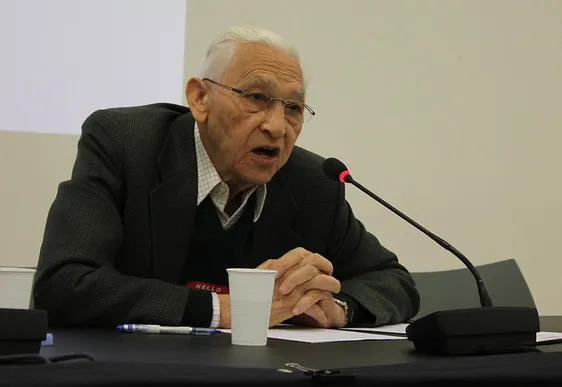
Datuk Dr Ronald McCoy was my father’s generation. They were in the University of Malaya in Singapore in 1948-52.
Ordinarily I would not have had the opportunity to get to know him well – except for the fact he was installed as president of the Malaysian Medical Association in May 1995.
This was the MMA annual meeting in which I proposed a resolution that read:
This House is deeply concerned at the deplorable state of health care on plantations and proposes that the MMA carries out a study of the health, educational and social problems in plantations and mounts a campaign to influence and effect change so that the plantation community can be integrated into the mainstream of national development and health care.
This resolution was adopted by the House, and led to the organising of a seminar on the Health Status of the Estate Population at the Faculty of Medicine on 26 November 1995. More than 10 papers were presented in that one-day event.
Datuk McCoy was very supportive of this effort and, in his foreword to the proceedings of this seminar, wrote:
Malaysia has in recent years experienced economic growth at a breathtaking pace. … However, it is unlikely that this economic growth could have taken place if there had not already been in place a substantial economic base to build on. This economic base was built through the hard work of plantation and tin mine workers. As beneficiaries, we owe these Malaysians a large debt of gratitude. We must begin to repay this debt to the plantation workers and their families, most of whom do not enjoy the benefits of education and health care that the rest of the population have access to.
- Sign up for Aliran's free daily email updates or weekly newsletters or both
- Make a one-off donation to Persatuan Aliran Kesedaran Negara (ALIRAN), Maybank a/c 507246118995 or CIMB a/c 8004240948
- Make a regular pledge or periodic auto-donation to Aliran
- Become an Aliran member
Datuk McCoy, the then MMA president, went on advocating for plantation workers, as mandated by the resolution adopted by the MMA in May 1995.
One of his major points was that the Ministry of Health did not have the power to instruct estates on health issues, while the Ministry of Human Resources, which did have the power, did not have the technical expertise to carry out this responsibility properly.
The human resources and health ministers did not like his comments, and they criticised him and the MMA in press statements.
However, Datuk McCoy did not back down, but instead responded with a four-page open letter to the government, detailing how the estate community had been marginalised in terms of healthcare, and giving specific recommendations how the situation could be improved.
This gives us the true measure of the man. He was unassuming, friendly and soft-spoken. “Call me Ronnie”, he would say repeatedly as I usually referred to him as Datuk McCoy.
But he was very firm on social justice, refused to kowtow to power, and stood his ground in his advocacy for plantation workers, and I suppose for nuclear disarmament too, at a different forum.
A leader we could look up to – who showed in word and deed what solidarity with one’s fellow human beings should look like.
Thank you, Ronnie. We will miss you! – Think Left
The views expressed in Aliran's media statements and the NGO statements we have endorsed reflect Aliran's official stand. Views and opinions expressed in other pieces published here do not necessarily reflect Aliran's official position.
- Tegakkan maruah serta kualiti kehidupan rakyat
- Galakkan pembangunan saksama, lestari serta tangani krisis alam sekitar
- Raikan kerencaman dan keterangkuman
- Selamatkan demokrasi dan angkatkan keluhuran undang-undang
- Lawan rasuah dan kronisme
